Call Now (403) 366-3770
How much does attic insulation cost in Calgary? Compare prices for top-ups and full replacements, see what affects quotes, and learn what your home needs.


In Calgary, a straightforward attic insulation top-up typically costs $1,800 to $4,200 for a 1,200-square-foot attic. Removing and replacing the existing insulation can cost approximately $4,800 to $9,000, with more complicated projects sometimes running higher.
Those are estimated 2026 market prices, not fixed quotes. The actual cost depends on your attic's size, how much insulation is already there, and whether any preparation or repairs are needed.
The good news is that many insulation upgrades can be completed by adding to what's already there. If the existing material is dry and in good condition, a top-up may be all your home needs.
Attic insulation is generally priced by the square footage of the attic floor. For a typical, accessible attic, these ranges provide a starting point for budgeting.
All prices are in Canadian dollars and are approximate budgeting ranges based on published installation costs of $2.50–$4.00 per square foot for a top-up and $5.50–$7.50 for removal and replacement with typical preparation. Taxes, major repairs, and specialized remediation may be additional.*
One detail worth remembering is that your attic's square footage may be smaller than your home's listed square footage. A two-storey home with 2,000 square feet of living space might have an attic floor measuring closer to 1,000 square feet.
This is often the biggest decision affecting attic insulation cost, and it's worth understanding before agreeing to a quote.
Suppose your attic already contains a layer of blown-in insulation. It's dry, reasonably evenly distributed, and free from obvious contamination, but there isn't enough of it to provide the level of thermal protection your home could benefit from.
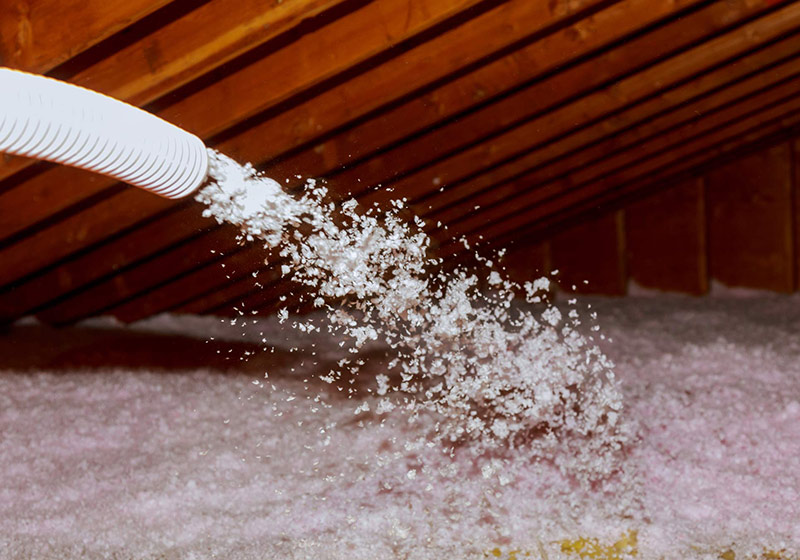
In that situation, the existing insulation can often remain in place while additional material is blown over it. The contractor should first address any air leaks or ventilation problems that could affect the installation.
A top-up generally costs less because you're keeping the usable material and avoiding the labour and disposal involved in removing it.
Some attics need more extensive work. Insulation affected by significant water damage, mould, or pest contamination may need to be removed so the underlying problem can be addressed.
Older homes can also contain materials that require special precautions. Vermiculite insulation, for example, may contain asbestos and should be assessed by a qualified professional before it's disturbed.
If a contractor recommends removing everything, ask what they found that makes replacement necessary. A clear explanation, supported by photographs or inspection findings, can help you understand the additional expense.
Imagine two Calgary homes with almost identical attic sizes.
The first has easy attic access and a reasonable amount of existing insulation. It only needs a modest amount of additional material to reach the recommended level.
The second has very little insulation, limited working space, and several areas that need air sealing before installation. Even though the attic floors are roughly the same size, the second project takes more material, preparation, and labour.
That's why square footage is only the starting point. Several details can affect your quote:
A higher quote can be justified when it includes necessary work that another estimate leaves out. Understanding those differences is more valuable than comparing the final numbers alone.
You'll probably hear contractors talk about R-values when discussing insulation. An R-value measures resistance to heat flow, so a higher number generally means better insulating performance.
The City of Calgary identifies R-60 as the requirement for ceilings below attics under the National Building Code – Alberta Edition. That provides a helpful benchmark, although existing homes aren't automatically required to meet every standard that applies to new construction.
The appropriate upgrade depends on what's already installed and the home's construction.
It's also important to understand that insulation and air sealing perform different jobs. Insulation slows heat transfer, while air sealing limits the movement of warm, moist indoor air into the attic. Natural Resources Canada recommends paying close attention to both air leakage and ventilation when upgrading attic insulation.
That means the depth of the insulation is only part of the assessment. The attic's overall condition helps determine how much additional material makes sense and whether other improvements should be completed first.
Once you start comparing quotes, the details become just as important as the total price.
A good estimate should clearly identify what you're paying for and what the finished installation will provide. Before accepting one, check that it includes:
Pay particular attention to anything listed as an extra or excluded from the estimate. Two contractors may recommend similar insulation upgrades while including very different amounts of preparation work.
If your attic has very little insulation, adding more can improve indoor comfort and reduce the amount of heating and cooling energy your home needs. The potential benefit depends on how the house is performing now, so there isn't one savings figure or payback period that applies to everyone.
If the existing insulation is already adequate, it may be worth investigating other causes of discomfort before investing in additional material. Air leakage and other parts of the building envelope can influence how well a home maintains its temperature.
The decision becomes easier when you know what improvement you're paying for and how it could benefit your particular home.
At Epic Roofing & Exteriors, we help Calgary homeowners understand the condition of their attic insulation and what an upgrade would involve. Our team can assess the space, explain the available options, and provide a detailed quote outlining the recommended work.
Whether you're comparing estimates or just starting to explore the cost, having a clear picture of the work involved makes it easier to decide what makes sense for your home and your budget.

Epic Roofing & Exteriors - Residential & Commercial Services