
Call Now (403) 366-3770
Learn what fibre cement siding is, how it handles Calgary weather, its benefits, drawbacks, maintenance needs, and whether it suits your home.


Replacing siding is rarely a decision homeowners make for one reason alone. Sometimes hail has cracked or punctured older panels, while in other cases, fading, loose sections, moisture concerns, or repeated repairs make it clear that the exterior is reaching the end of its useful life.
Once replacement becomes necessary, many Calgary homeowners begin by looking at vinyl because it is familiar and affordable. Fibre cement often enters the conversation when people start asking whether a stronger, longer-term material would make more sense for Alberta’s weather.
You may also hear fibre cement called Hardie Board or James Hardie siding. It offers a durable, wood-like appearance along with strong resistance to fire, pests, rot, and temperature changes, although it also requires a higher initial investment than standard vinyl and must be installed carefully.
Understanding how fibre cement is made, how it performs in Calgary, and what ownership involves can help you decide whether it suits your home and renovation plans.
Fibre cement combines Portland cement, sand, water, and cellulose fibres to create a rigid exterior cladding. The cement and sand provide much of the product’s strength, while the fibres reinforce the material and help it withstand everyday movement and impact.
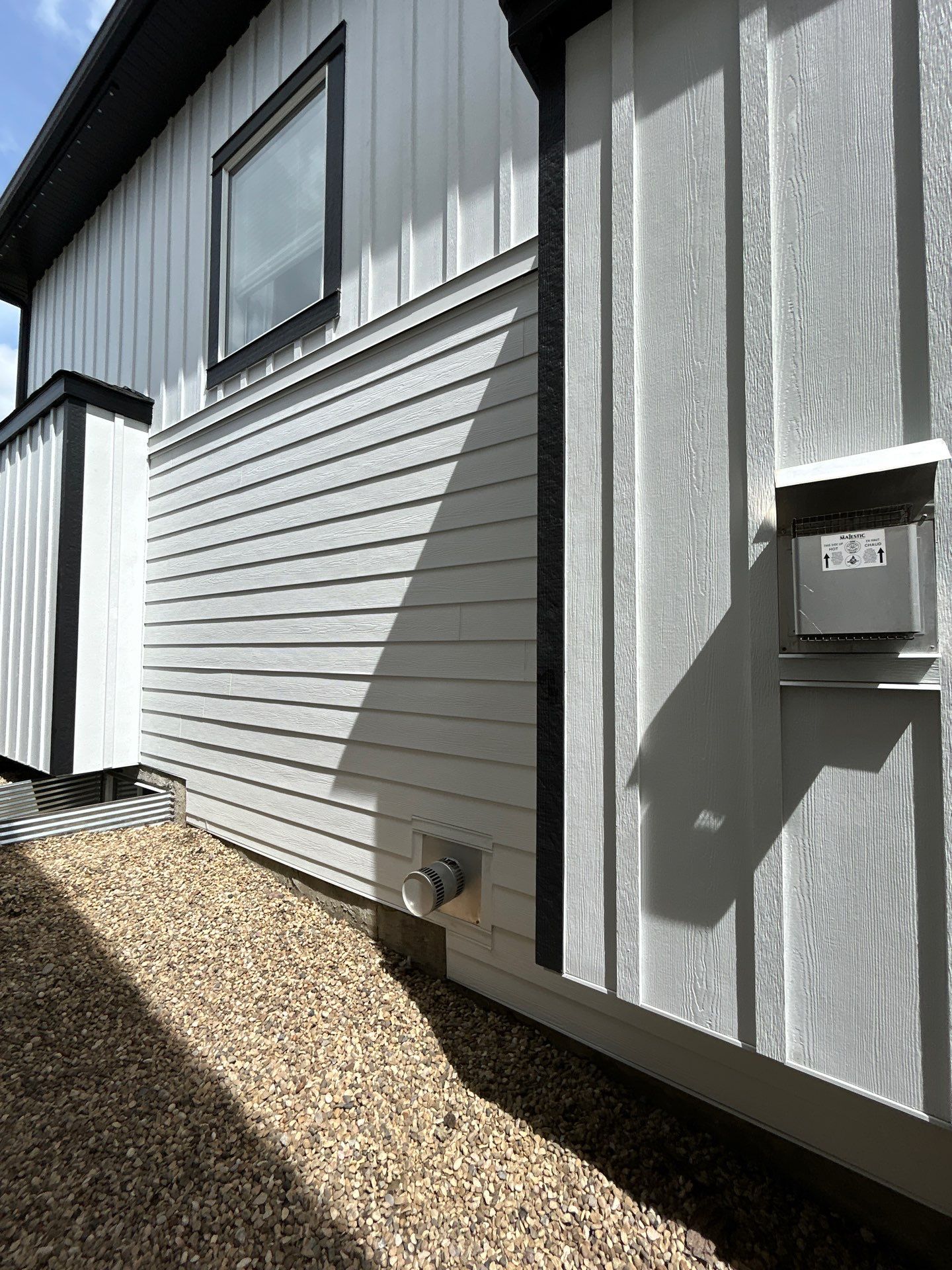
During manufacturing, the material is formed into horizontal planks, vertical panels, shingle-style pieces, trim boards, and soffit products. The surface may be smooth or embossed with a wood-grain texture, allowing homeowners to achieve the appearance of painted wood without taking on the same maintenance demands.
Fibre cement is the name of the material category. James Hardie is one of the best-known manufacturers, while “Hardie Board” is a common informal name homeowners use when discussing its products. Other manufacturers also produce fibre cement, so it is important to compare the exact product line, finish, installation requirements, and warranty included in each quote.
Calgary siding must withstand hail, high winds, snow, freezing temperatures, strong summer sunlight, and rapid changes in temperature. These conditions can expose weaknesses in lightweight, brittle, ageing, or poorly installed materials.
Fibre cement performs well in this environment because it is rigid and dimensionally stable. It is generally less vulnerable than standard vinyl to punctures, cracking, and distortion during ordinary hail and wind events. A homeowner replacing storm-damaged vinyl for the second time may therefore see fibre cement as a way to invest in a more resilient exterior.
No siding material can be guaranteed against every hailstorm. Large or wind-driven hail can still damage fibre cement, windows, trim, flashing, roofing, and other exterior components, but fibre cement is built to provide stronger impact resistance than many entry-level siding materials.
Fibre cement is non-combustible and will not melt when exposed to high heat in the same way vinyl can. This may be especially relevant for homes near grassland, wooded areas, or locations where wildfire exposure is a concern.
The siding alone does not make the entire wall fireproof. Fire performance also depends on the sheathing, insulation, soffits, vents, windows, doors, and other openings around the home.
Fibre cement remains stable through Calgary’s seasonal temperature changes. It does not soften during summer heat or expand and contract as noticeably as some other siding products.
Proper flashing, clearances, drainage, and sealing remain essential because water trapped behind any type of siding can damage the wall beneath it. Fibre cement is durable, but it cannot compensate for a poorly constructed or poorly maintained wall system.
One of fibre cement’s strongest advantages is long-term exterior protection. The material does not rot like natural wood, and insects cannot use it as a food source. It also resists warping, heat damage, and routine moisture exposure when the siding and wall system have been installed correctly.
Its heavier, more substantial construction can improve the appearance of a home as well. Fibre cement creates deeper shadow lines than many lightweight siding products and can give the exterior a more finished, permanent look. Homeowners renovating an older property or planning to remain in the home for many years may view that appearance as part of the long-term value.
Fibre cement provides the look of painted wood with less ongoing care. Natural wood siding may require regular staining, sealing, painting, and pest protection, whereas fibre cement generally has more manageable maintenance requirements.
It is best described as low-maintenance rather than maintenance-free. Cleaning, caulking inspections, drainage checks, and occasional paint or finish repairs are still necessary to keep the exterior performing properly.
Horizontal lap siding works well on many traditional Calgary homes, while shingle profiles can add detail to gables and accent areas. Vertical panels can create a board-and-batten look, and smooth panels with simple trim can suit a contemporary exterior.
Fibre cement can also be paired with stone, brick, stucco, and other accent materials. This gives homeowners flexibility to update the appearance of the entire house or use fibre cement only in selected areas.
The main limitation is the higher initial cost. Fibre cement usually costs more than standard vinyl, and the material itself is only part of the total project. Home height, wall area, removal of the existing siding, trim details, insulation, house wrap, flashing, and repairs to damaged sheathing can all affect the final quote.
Installation is also more demanding because fibre cement is heavier than vinyl and must be cut, fastened, flashed, sealed, and spaced according to the manufacturer’s specifications. Proper clearances must be maintained around roofs, decks, walkways, driveways, and soil.
Mistakes in these areas can lead to cracking, staining, trapped moisture, or warranty concerns. For this reason, installation quality should carry as much weight as the product name when you compare contractors.
Both fibre cement and vinyl can be appropriate for Calgary homes. The better choice depends on how much you want to spend initially, how long you plan to own the property, the appearance you prefer, and how much resilience you expect from the exterior.
Vinyl remains a practical choice for homeowners who want to control the initial project cost or need to divide their renovation budget among siding, roofing, windows, insulation, and other repairs. It is widely available, easy to maintain, and offered in a broad range of colours and profiles.
Fibre cement is often a better fit for someone who expects to remain in the home for many years, has dealt with repeated hail damage, or wants a more substantial wood-like exterior. Insulated vinyl may also deserve consideration when added wall performance is a priority, but fibre cement does not fit the available budget.
Most fibre cement maintenance involves keeping water under control and addressing small issues before they spread. Homeowners should periodically:
These steps are not complicated, but they protect both the siding and the wall behind it. Early repairs are usually easier and less expensive than allowing moisture to reach the sheathing or framing.
Fibre cement is generally selected as a long-term siding material, but its performance depends on more than the product alone. Installation quality, drainage, flashing, finish condition, maintenance, and storm exposure all influence how well it ages.
Manufacturer warranties can help homeowners compare products, although the siding, trim, factory finish, and contractor workmanship may each have separate terms. A long material warranty does not correct poor installation, which is why the contractor’s experience and workmanship coverage should be considered alongside the product warranty.
Before signing a contract, ask which product line is included, what each warranty covers, whether registration is required, and who will handle service if a concern appears later.
Fibre cement may make sense when you have repaired hail-damaged vinyl more than once, expect to remain in the home for many years, or want a more substantial wood-like appearance. It can also suit homeowners who place a high value on fire resistance, durability, and lower maintenance than natural wood.
Another siding option may be more practical when keeping the initial price down is the main priority, or several major projects need to share the same renovation budget. When the roof, windows, insulation, and eavestroughs also need attention, a more affordable siding option may leave room for work that provides greater immediate value.
The condition of the existing wall should also influence the decision. Damaged sheathing, inadequate insulation, failed house wrap, or poor flashing may need to be corrected before new siding is installed. A complete exterior inspection will provide a more useful recommendation than comparing material samples alone.
Epic Roofing & Exteriors has helped Alberta homeowners protect and improve their homes since 2001. With more than 40,000 completed projects, our team understands how Calgary weather affects siding, roofing, eavestroughs, soffit, fascia, and the rest of a home’s exterior.
We install James Hardie fibre cement siding and can help you compare it with vinyl and other siding options based on your priorities, budget, and the condition of your home. Our process begins with a careful exterior assessment, followed by a clear explanation of the available solutions and the work required to complete the project properly.
Contact Epic Roofing & Exteriors for a free quote if you are considering fibre cement siding.

Epic Roofing & Exteriors - Residential & Commercial Services

